For operators working on farms, orchards, mountain plots and small construction projects, off-road four-wheel drive transport vehicles have become indispensable workhorses for hauling crops, construction muck, fertilizer and bulk materials. However, many buyers struggle to pick a unit that matches their daily working conditions, leading to insufficient power, poor terrain passing ability or excessive fuel waste. Industry insiders recently shared practical guidance to help purchasers make cost-effective, long-lasting choices.
Match Engine Horsepower to Your Daily Load and Terrain
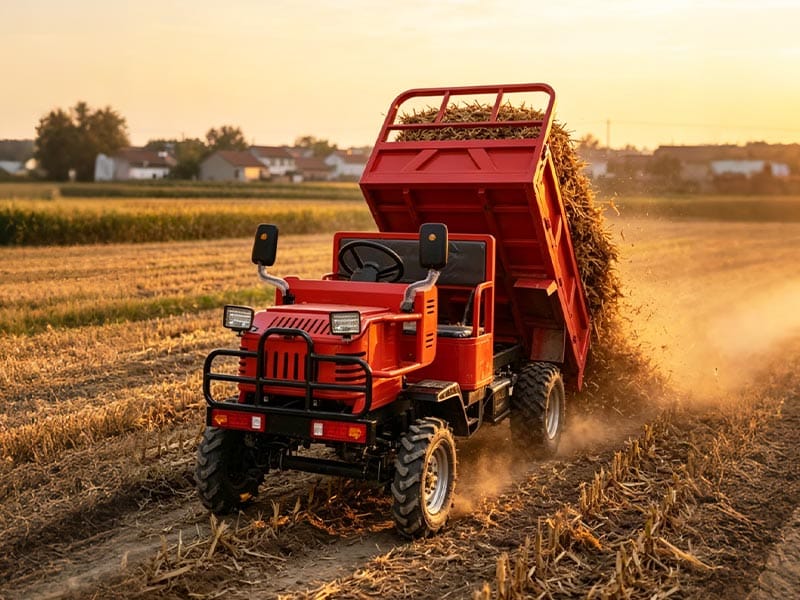
Engine power is the core factor determining a vehicle’s climbing and load-bearing performance. Light-duty tasks such as transporting fruits, vegetables and grain on flat rural roads can be covered by single-cylinder water-cooled diesel engines ranging from 25HP to 32HP. For heavy-duty scenarios including mountain orchards, muddy steep slopes and small mine earthwork transport, four-cylinder diesel engines above 50 horsepower are highly recommended. These high-power configurations deliver stable torque when fully loaded and avoid stalling when climbing uneven rugged ground.
Buyers are reminded to prioritize water-cooled engine versions. Compared with air-cooled alternatives, water-cooled engines maintain steady operating temperatures during all-day continuous work, reducing overheating risks and extending the whole machine’s service life. Many manufacturers also offer upgradeable high-power engine kits for later replacement if operation demands expand.
Select Drive Mode Based on Road Complexity
Part-time 2WD/4WD switchable drive systems remain the most versatile option for mixed working environments. Operators can run two-wheel drive on flat paved paths to cut fuel consumption, then shift to four-wheel drive with one simple lever when tackling mud, loose soil or steep hills.
Pure two-wheel drive models are only suitable for fully flat farmland without slopes, while permanent four-wheel drive units carry higher manufacturing and maintenance costs, making them uneconomical for small-scale seasonal users. Six-wheel layouts are an extra worthy consideration for buyers pursuing larger cargo capacity and better anti-slip performance on soft ground, as extra rear wheels disperse vehicle weight to prevent sinking.
Check Key Structural and Safety Configurations
The vehicle’s frame, braking system and unloading mechanism directly impact operational safety and durability:
- Frame: Reinforced thick rectangular tube frames are far more resistant to deformation under frequent heavy loads than thin-walled frames.
- Braking system: Vacuum booster brakes fit light-duty transport, while full air brake systems are essential for heavy-load mountain transportation to ensure reliable stopping on downhill slopes.
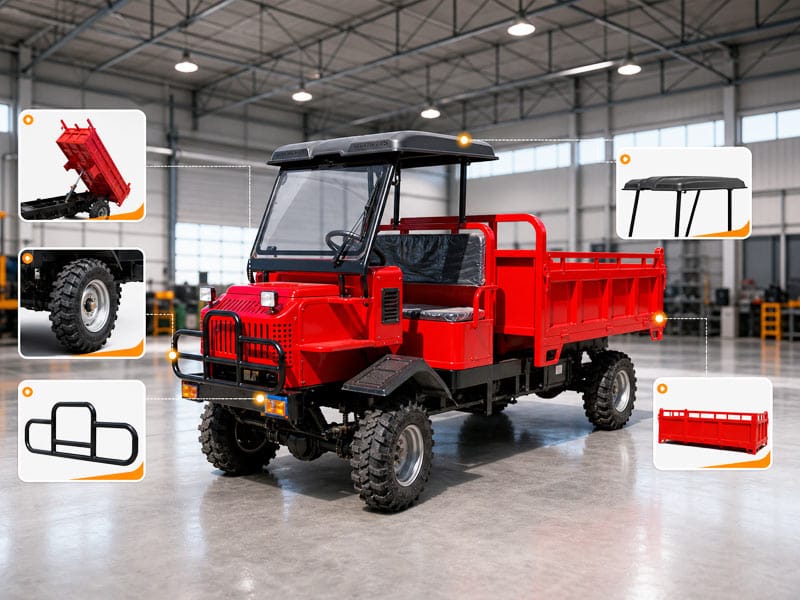
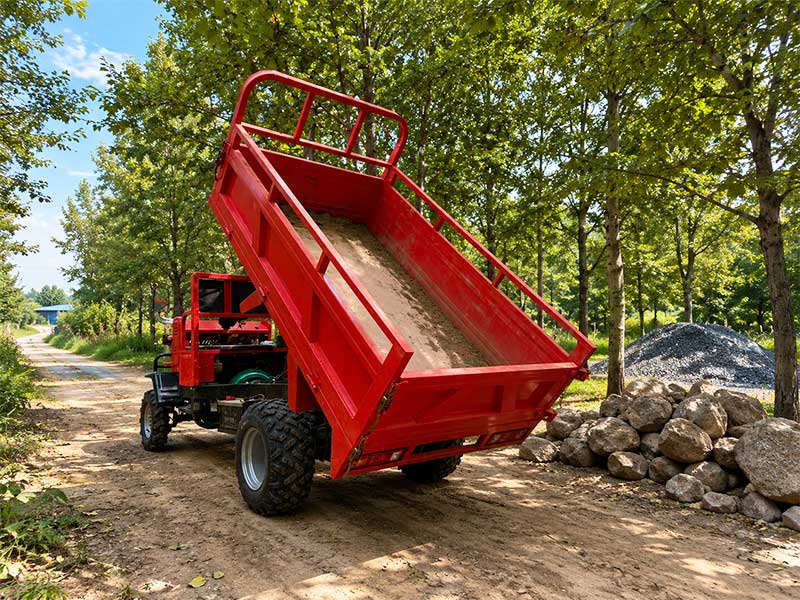
- Hydraulic self-unloading: Single hydraulic tipping cylinders satisfy daily light hauling, and dual hydraulic lifting rams deliver more stable lifting for full heavy cargo boxes, reducing jitter during dumping.
- Tires: Deep-tread mountain tires provide strong traction on mud and rough terrain; standard road tires are not recommended for off-road working conditions.
Confirm Cargo Box Size and Customization Options
Cargo box dimensions should align with the volume of materials you transport every day. Standard small boxes work for fruit and vegetable picking transport, while larger deep-side cargo boxes suit sand, soil and construction waste hauling. Most suppliers provide detachable extension boards to temporarily expand loading capacity during harvest seasons.
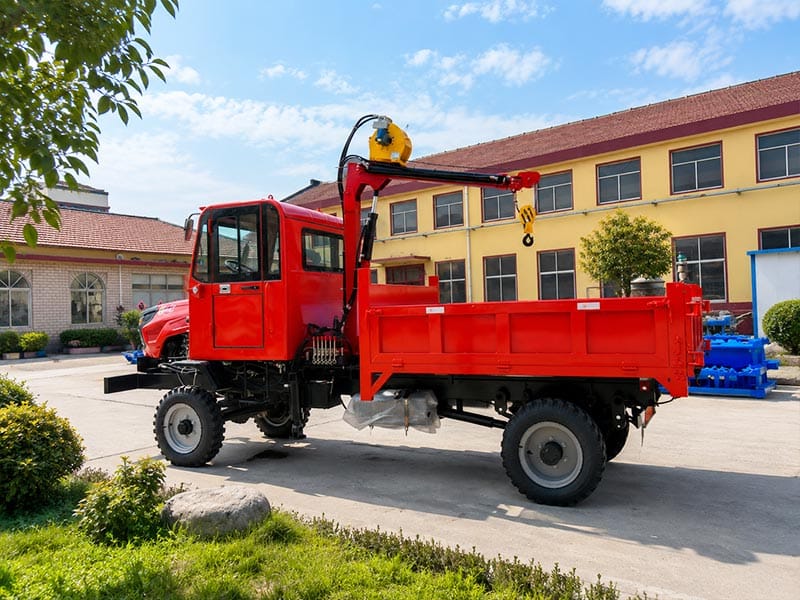
Multiple body color choices are generally available to meet site management demands, and a full set of optional attachments can be fitted, including log loaders, mini excavator brackets and small truck-mounted cranes to realize multi-purpose operation with one vehicle.
Evaluate Maintenance and After-Sales Support
Before purchasing, confirm whether complete universal spare parts are accessible locally. Vehicles with mature, standardized transmission assemblies, axles and gearboxes cut downtime and maintenance costs significantly. Avoid niche custom components that lead to long waiting times for replacements.
Industry experts added that a balanced selection logic prioritizes working conditions first, then load demands, followed by core configurations. A properly matched four-wheel drive transport vehicle can boost daily operation efficiency by over 40% compared with mismatched light-duty models, while lowering long-term fuel and repair expenses.